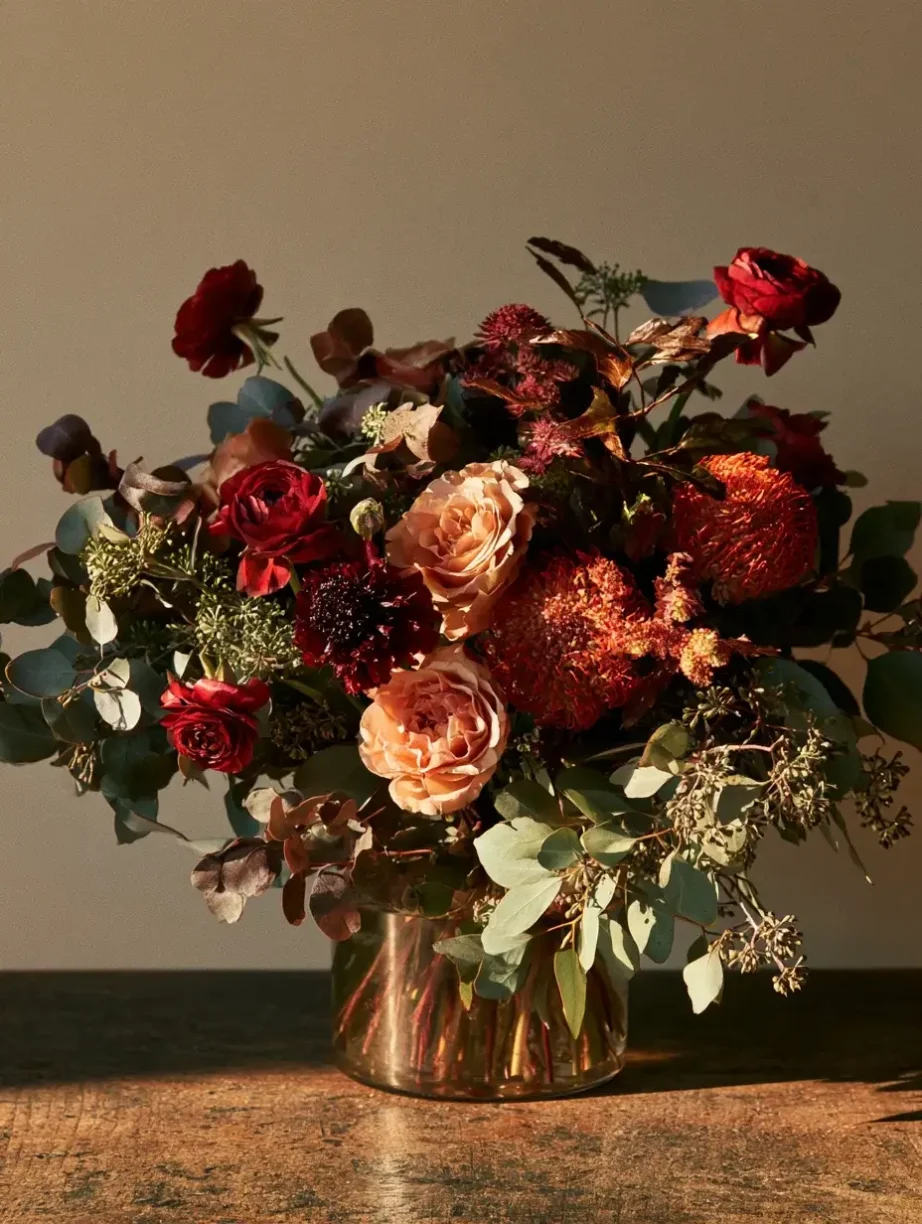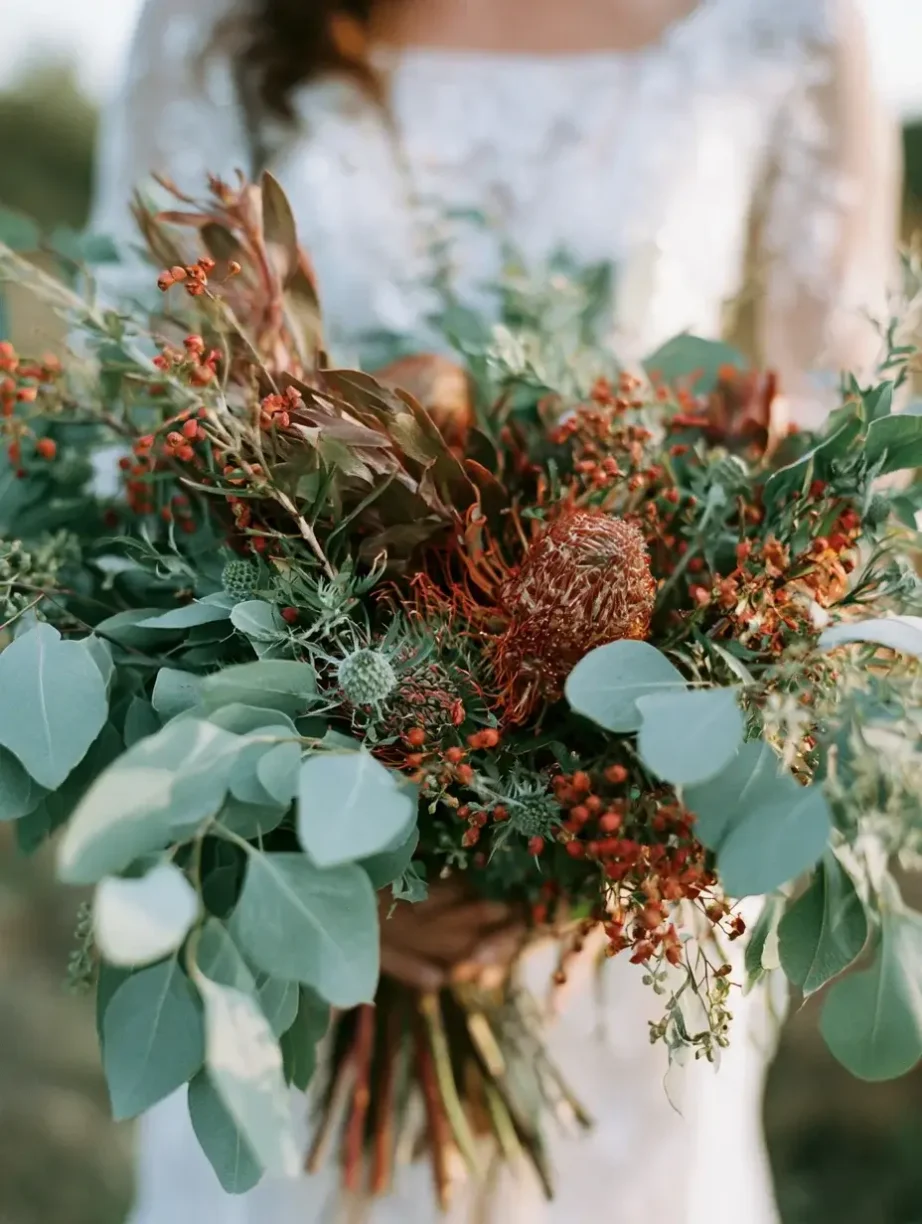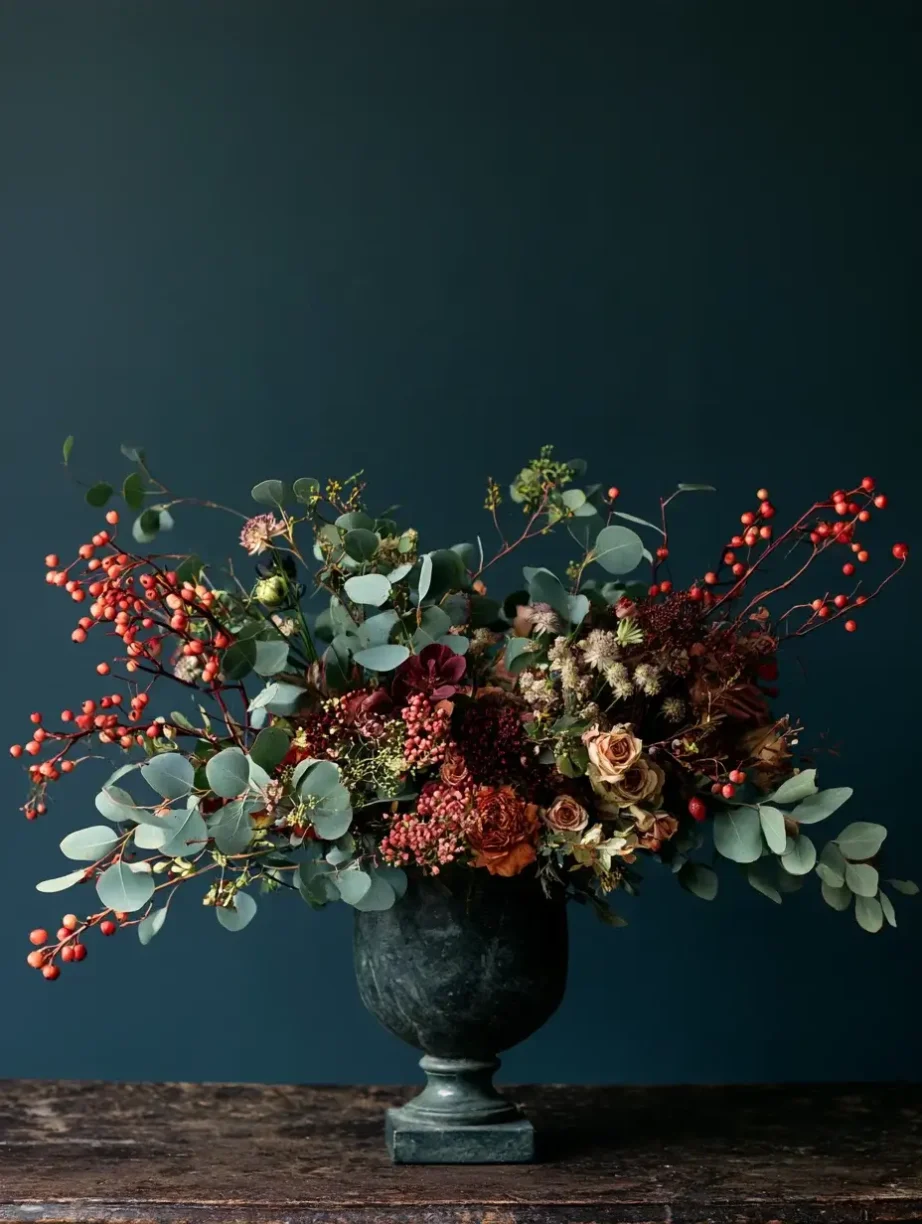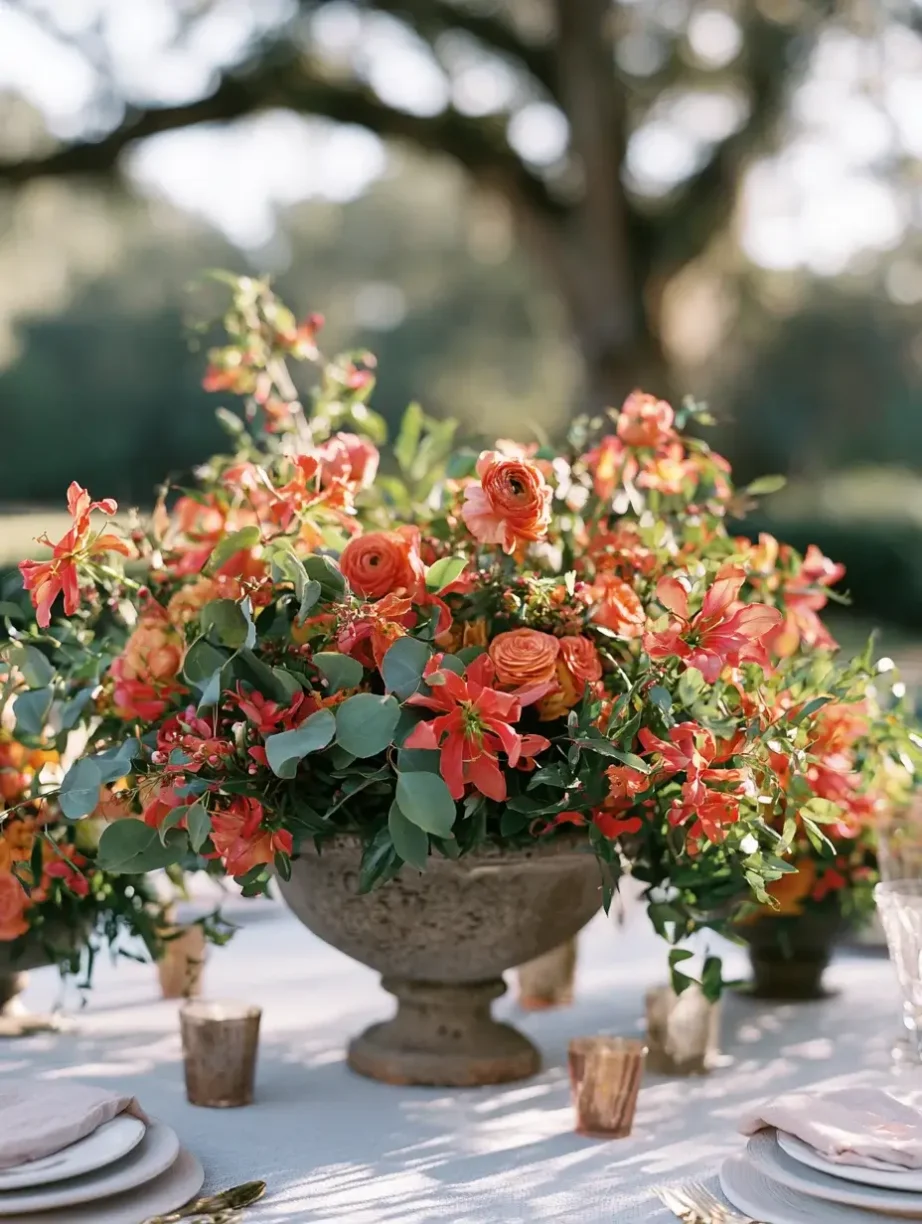
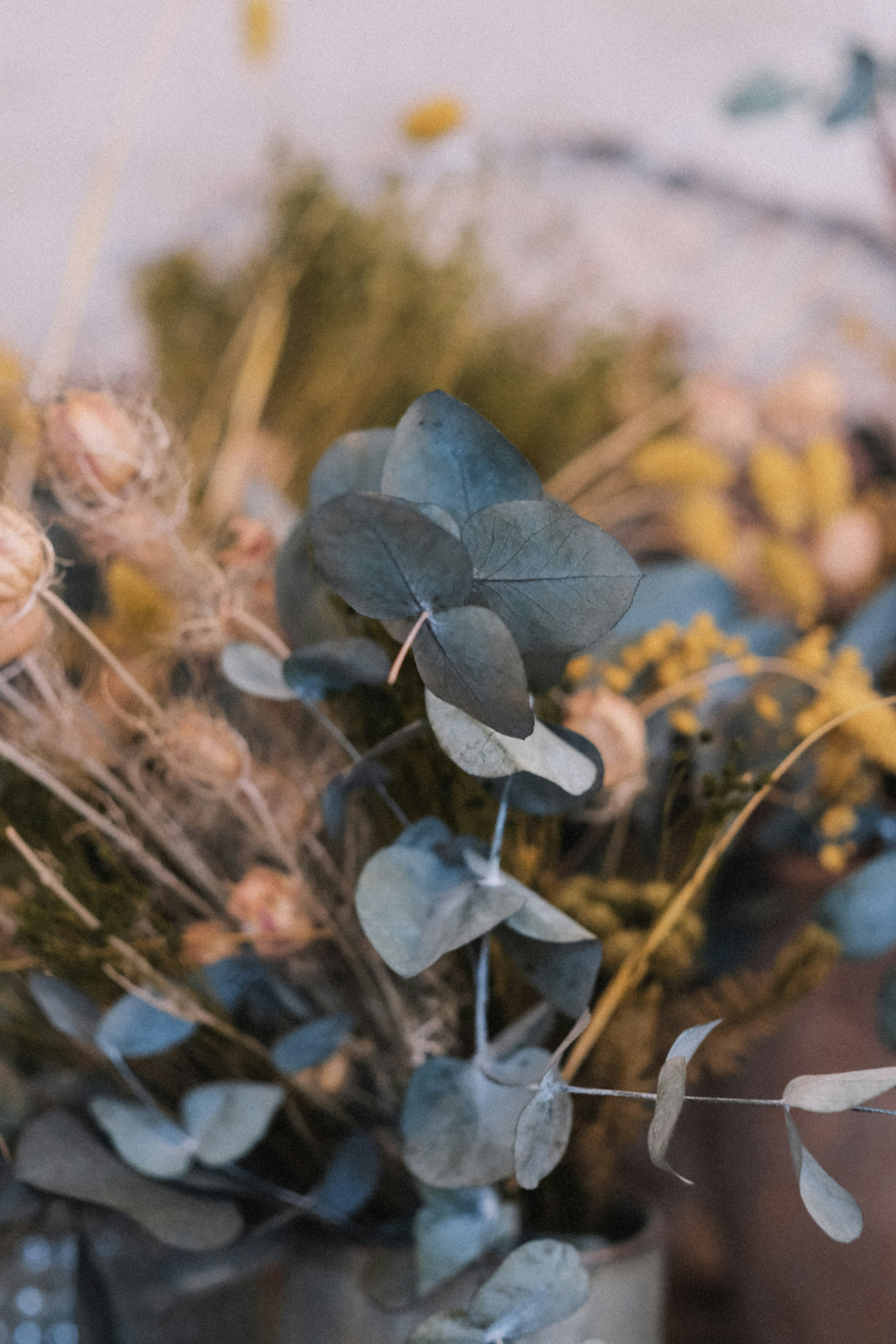
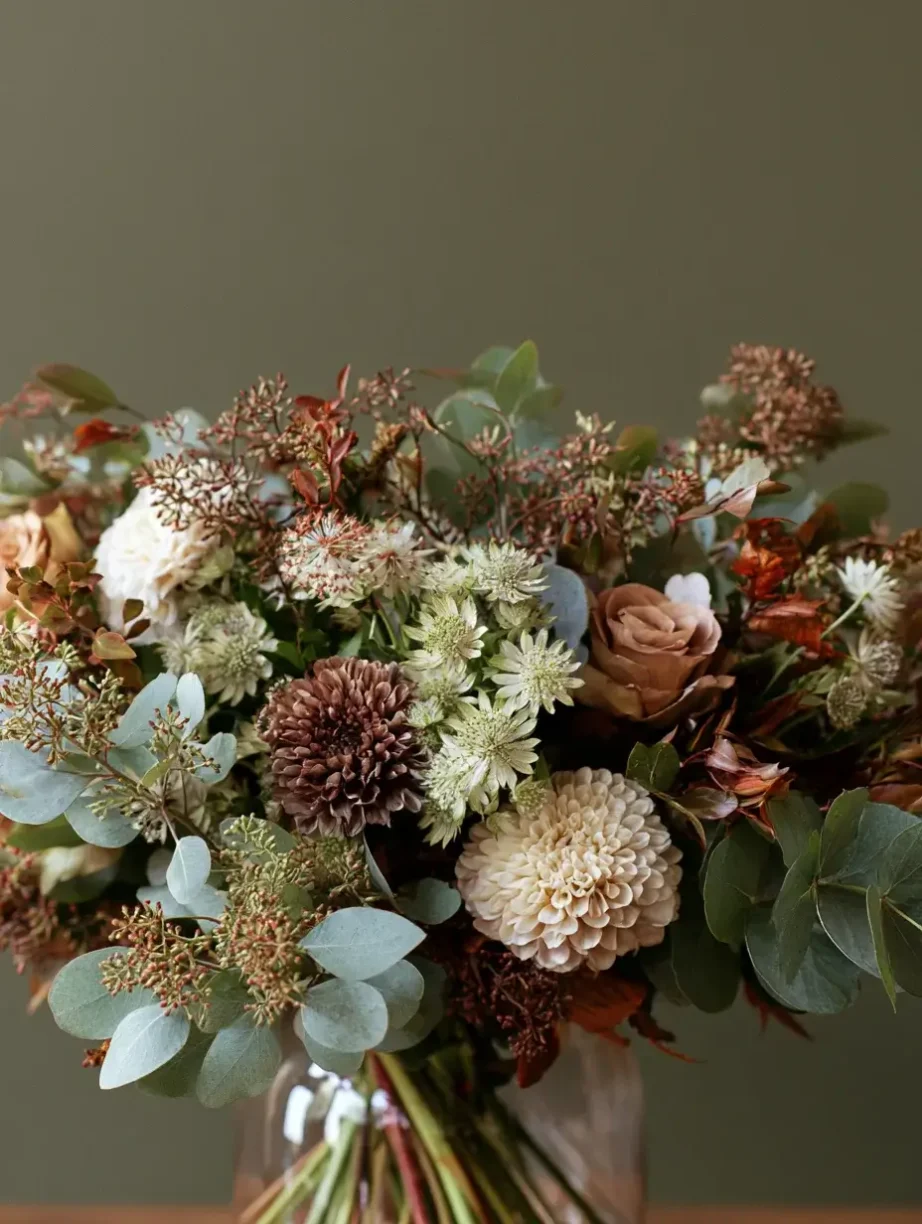
Eucalyptus brings a gentle contrast to fall flower arrangements through its soft texture and subdued color. Its leaves range from muted green to cool, silvery gray, adding depth without the visual weight of a bold bloom. These tones sit naturally alongside autumn’s familiar palette of rust, burgundy, ochre, copper, and cream.
Rather than competing with seasonal flowers, eucalyptus frames them, softens strong color combinations, and creates a calm transition between different shapes and hues. Its foliage also contributes a fresh, aromatic quality that enhances the experience of an arrangement. The clean, distinctive scent balances the earthy notes of dried grasses and branches while remaining subtle when used in moderation.
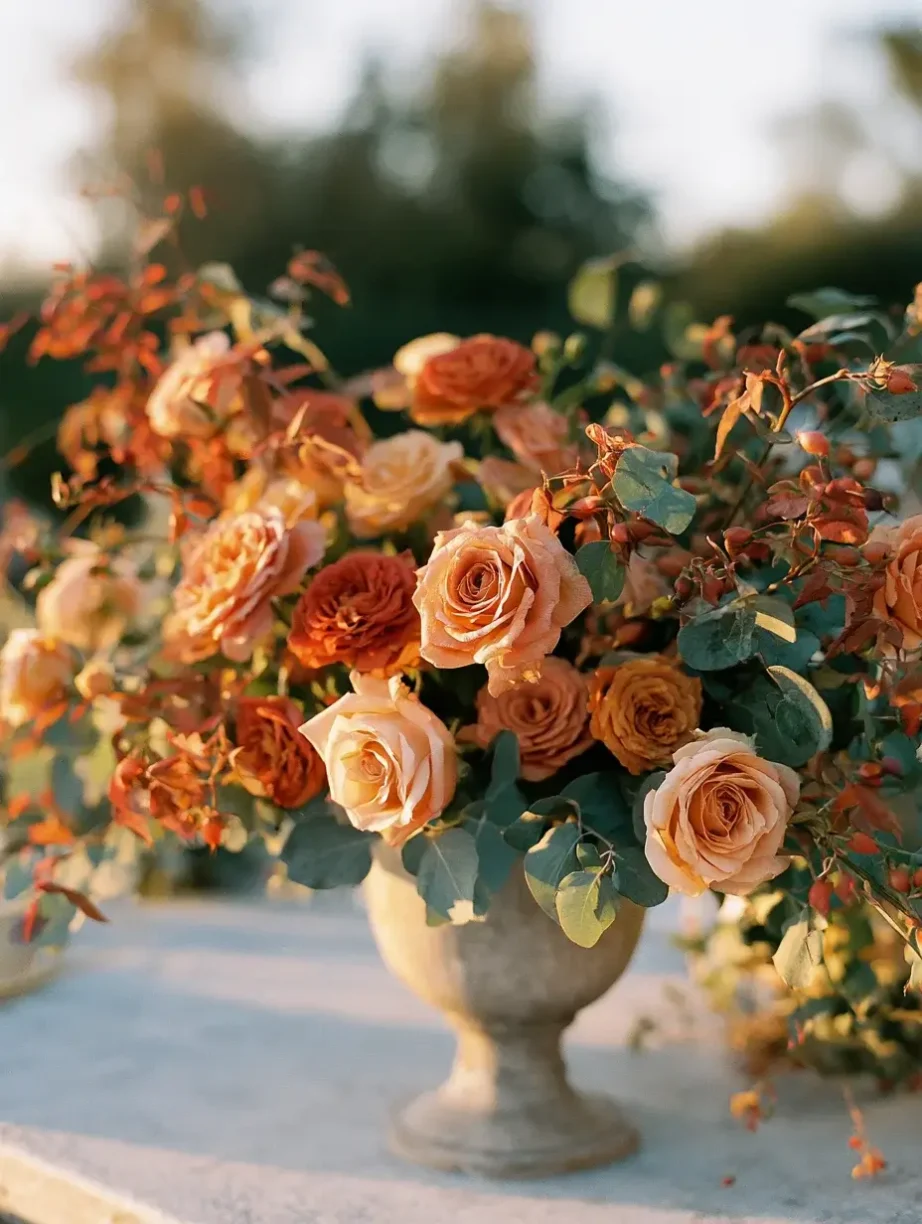
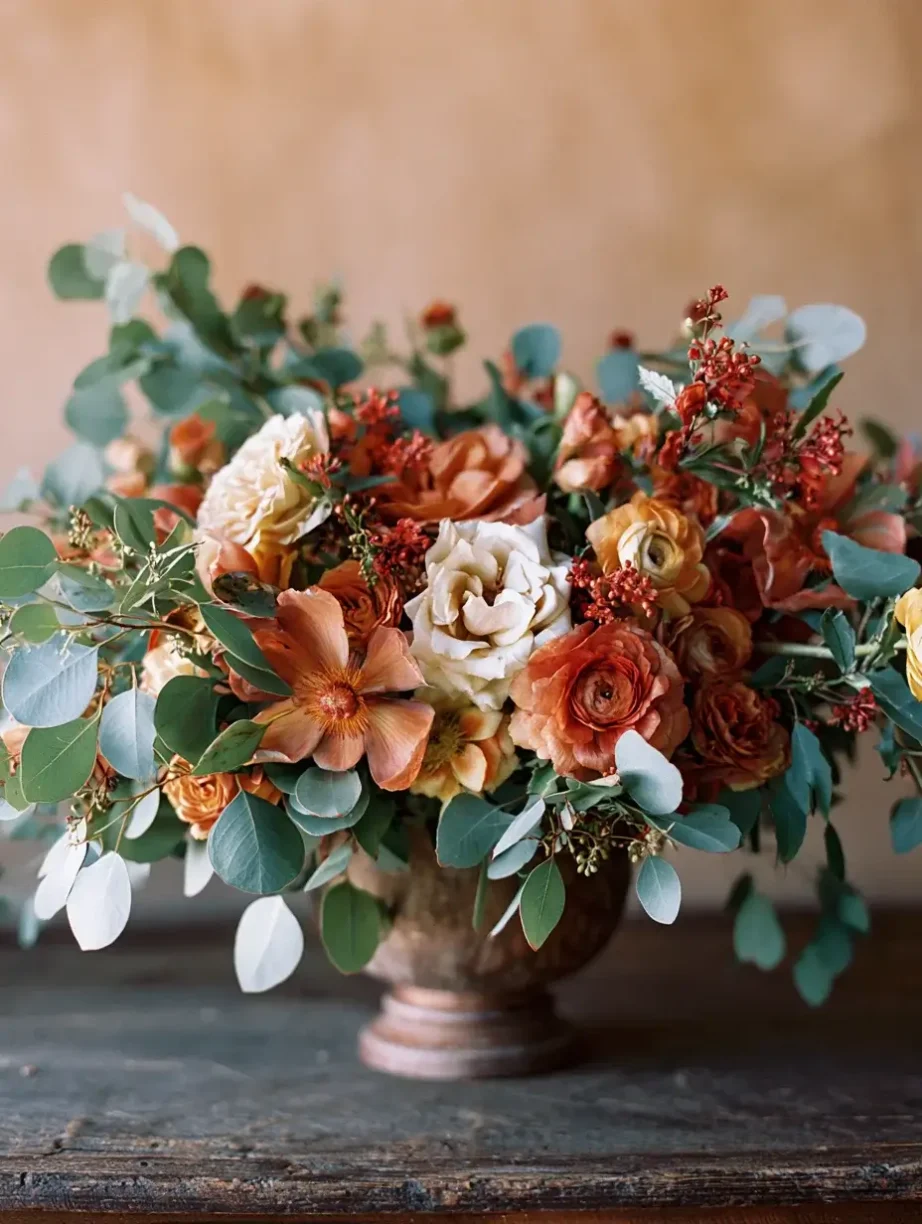
Why Eucalyptus is Perfect for Autumn Design
The plant’s versatility makes it suitable for many fall design styles:
- Rustic: Relaxed stems pair well with textured flowers, berries, and natural containers.
- Modern: Introduces an uncluttered line and a restrained color accent.
- Romantic: Soft foliage complements layered blooms beautifully.
- Minimalist: A few carefully placed stems give an airy, intentional finish.
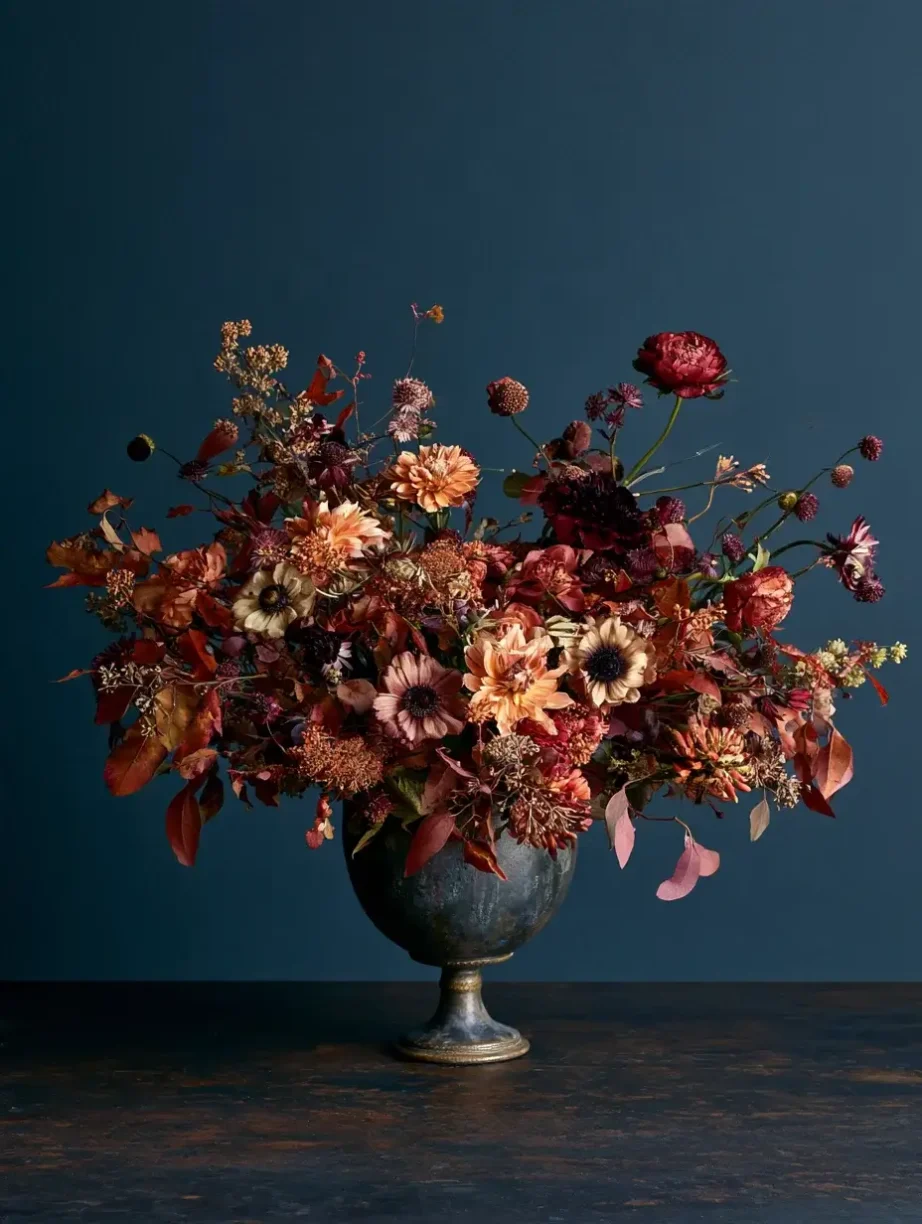
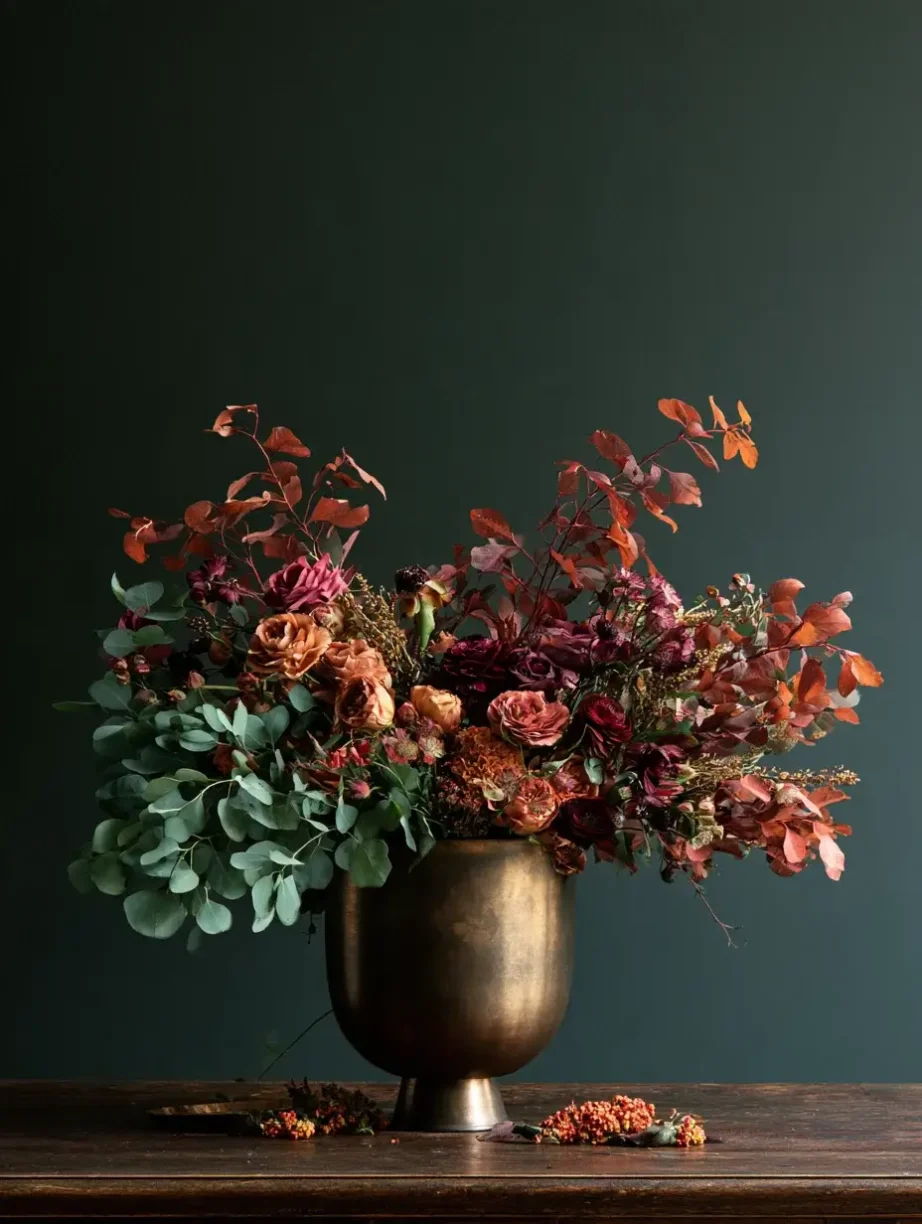
Choosing the Right Eucalyptus Variety
The specific variety matters. Choosing eucalyptus by its leaf shape and stem form helps match the foliage to the flowers and the overall mood.
- Seeded Eucalyptus: Has narrow leaves and small clusters of round seed pods. It adds delicate detail and an airy, lightly rustic quality. Flexible stems work well as a bridge between larger flowers and finer accents.
- Silver Dollar Eucalyptus: Recognized by its broad, circular leaves in cool green or silvery tones. The smooth, rounded foliage gives bouquets a clean, sculptural look and provides a useful contrast to layered petals.
- Baby Blue Eucalyptus: Features slender stems, blue-green leaves, and a soft, dusty finish. It suits loose, natural designs and pairs easily with both warm and muted colors.
- Gunnii Eucalyptus: Features small, rounded leaves along branching stems, creating a finer texture that can fill gaps without overwhelming the flowers.
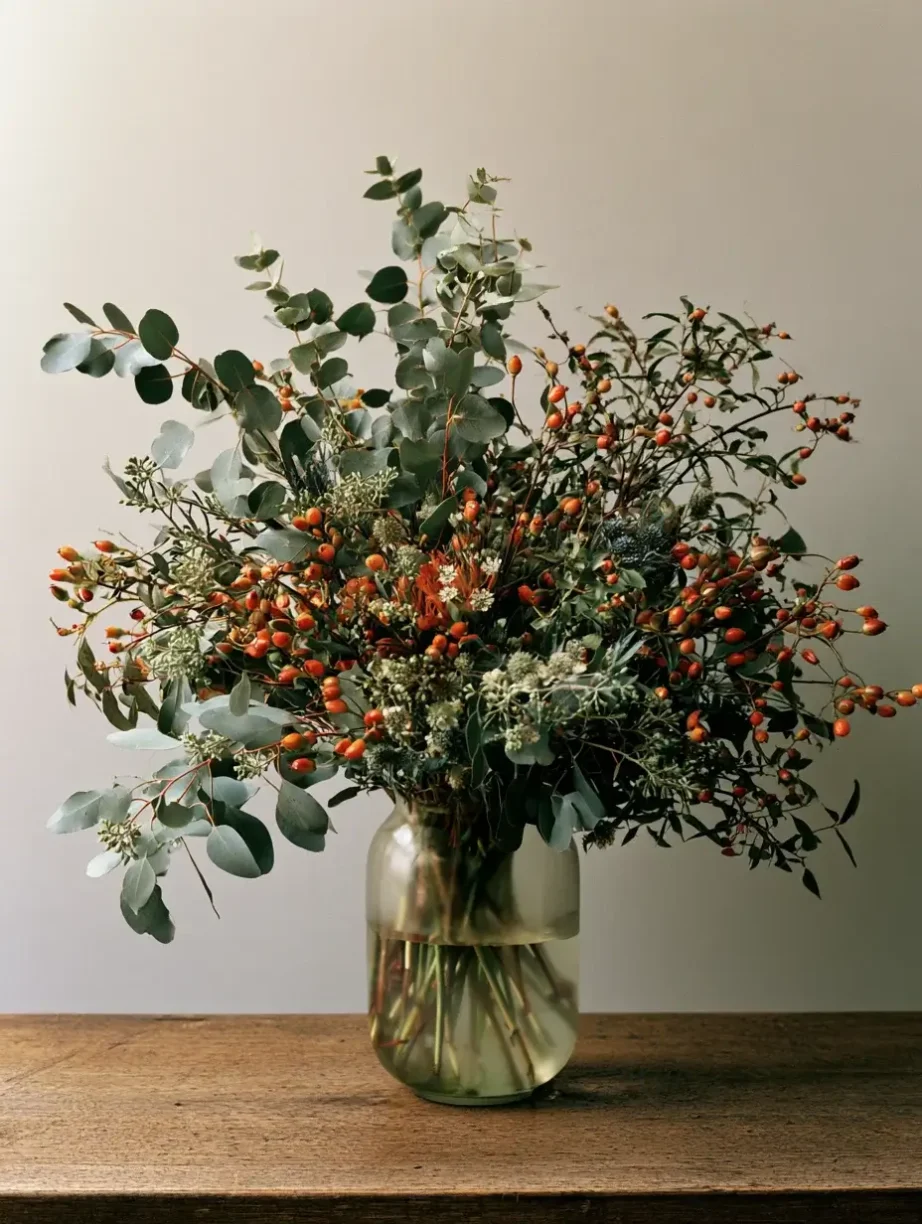
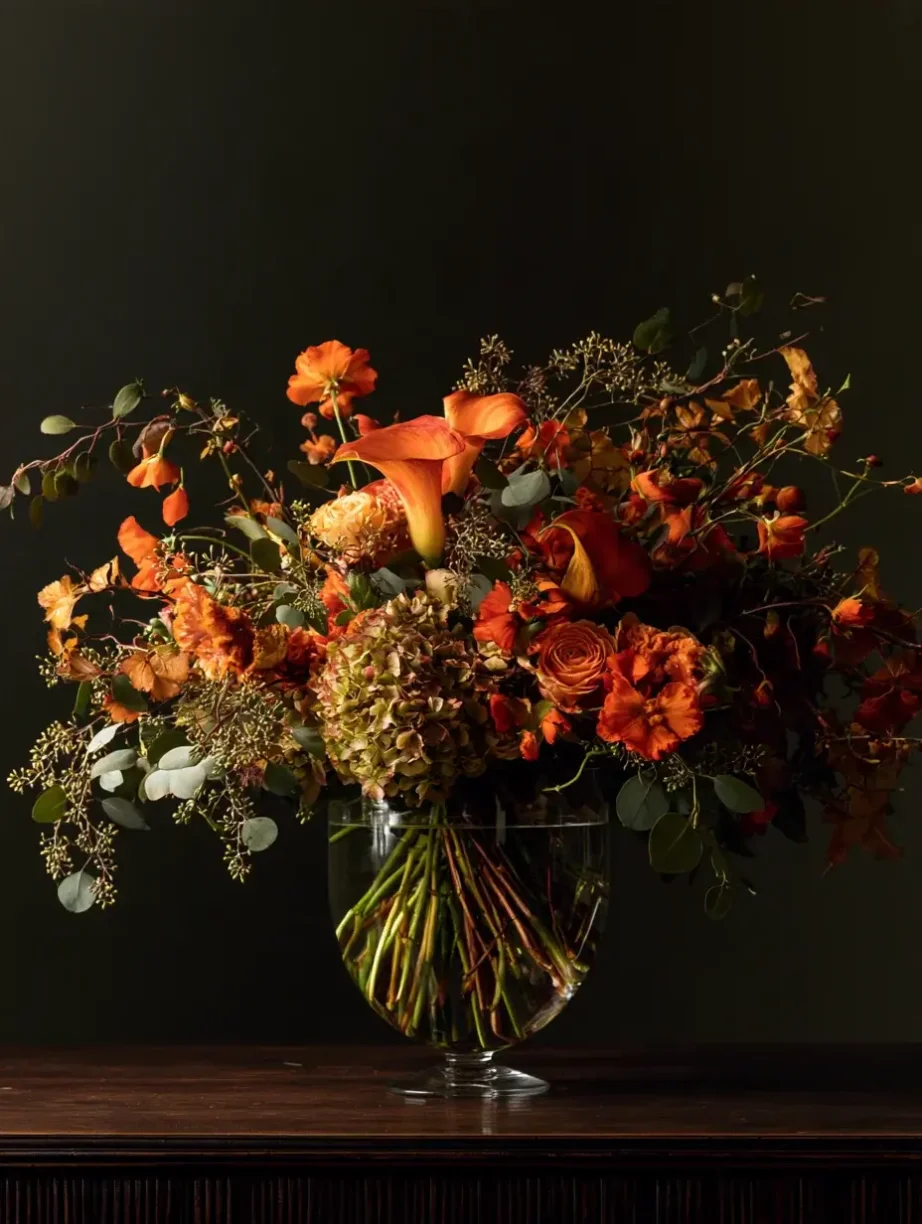
Designing Your Fall Arrangement
1. Select Your Color Palette
Color choices can reinforce the season or give a softer interpretation of fall.
- Rich & Warm: Pair deep dahlias or chrysanthemums with golden zinnias, russet grasses, and silvery eucalyptus.
- Light & Airy: Combine cream roses, blush asters, and sage-toned greenery, then add berries or a few dark branches for definition.
Tip: Eucalyptus’s cool cast can temper saturated autumn colors, while its muted greens complement pale flowers without competing for attention.
2. Choose the Right Vessel
- Low, Wide Bowl: Supports a spreading arrangement.
- Taller Vase: Holds upright branches and longer eucalyptus stems.
- Scale: Match the container to the flowers. A small vessel can look overwhelmed by heavy stems, and a large one may make a modest arrangement seem sparse.
3. Step-by-Step Arranging Guide
- Prep the Stems: Remove leaves that would sit below the waterline, recut stem ends at an angle, and place them in clean water to hydrate.
- Establish the Outline: Use eucalyptus first. A few taller stems create height, while shorter branches set the width. Vary stem lengths and directions—angled and gently cascading foliage gives the design movement.
- Add Focal Flowers: Place the most prominent blooms (like dahlias or garden roses) at varied heights where they can be seen from the main viewing angle.
- Fill and Connect: Add supporting flowers and fall accents, such as berries, seed heads, or textured grasses, to connect the larger blooms and complement the eucalyptus.
- Refine the Silhouette: Step back and remove crowded stems. Preserve open areas between foliage and flowers—negative space keeps the arrangement natural rather than packed.
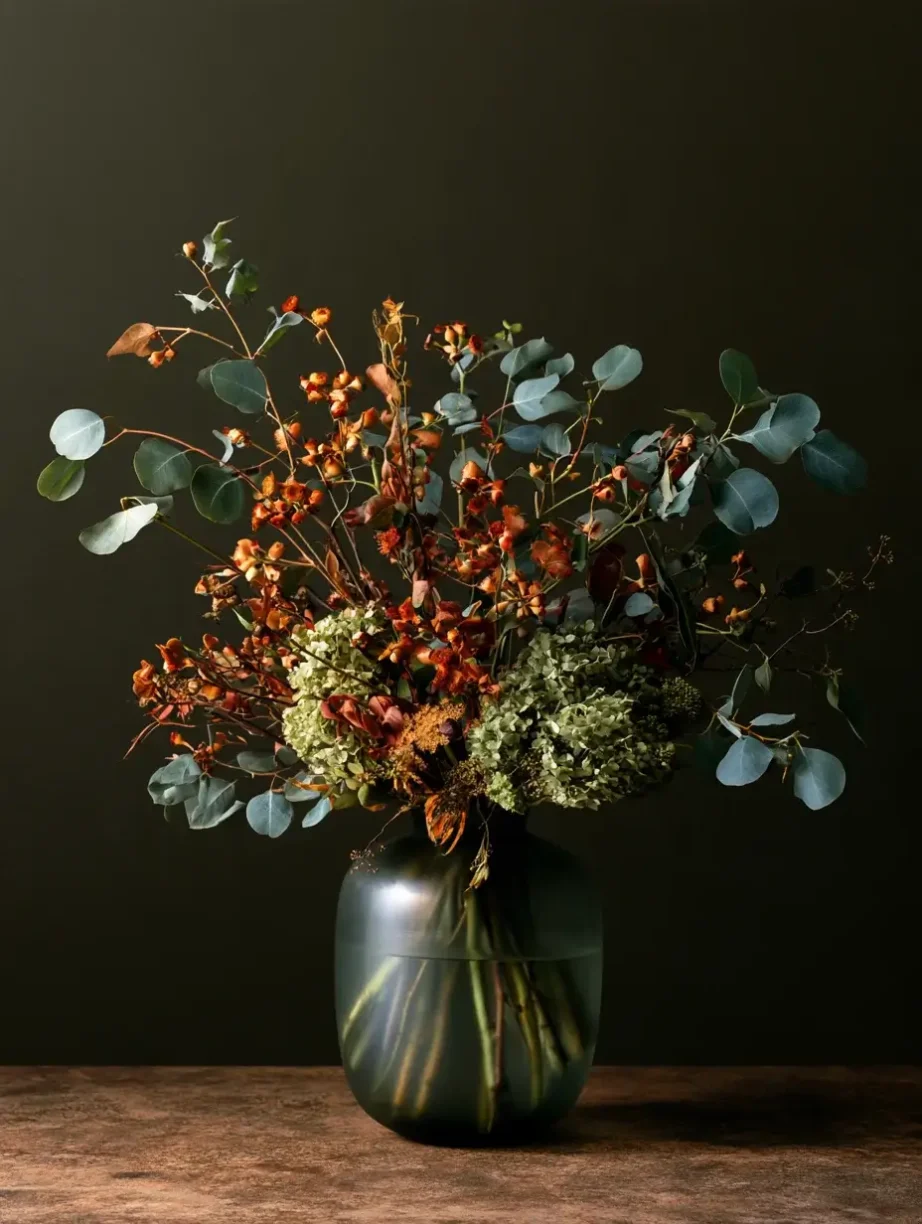
Care and Maintenance for Long-Lasting Blooms
Good care begins before the stems go into a vase. Wash the vase thoroughly with hot, soapy water and use clean, sharp shears to make fresh cuts. Dirty containers and tools can introduce bacteria that shorten the life of both eucalyptus and flowers.
- Watering: Fill the vase with fresh, room-temperature water and add floral preservative. Check the arrangement regularly and replace the water every few days, or sooner if it looks cloudy.
- Recutting: At each water change, recut the stems at an angle to improve water uptake and remove any wilted leaves or flowers.
- Placement: Choose a cool spot away from radiators, fireplaces, heating vents, and direct sunlight. Warmth and strong sun can speed moisture loss.
Safety Note: Keep fresh stems and leaves out of reach of pets and children, as eucalyptus can be harmful if ingested. Dried eucalyptus also presents a fire risk, so keep it away from open flames.
Eucalyptus commonly remains attractive longer than softer, more fragile flowers. If the greenery still looks sound after the fresh flowers have faded, it can be reused in another arrangement or left to dry naturally, extending the beauty of your autumn decor.